On-Device vs Cloud Computer Vision: Where Should Inference Live?
Run computer vision on-device when latency, connectivity or unit economics matter: real-time scanning at 30fps, dead-zone environments, and per-image cloud pricing that collapses at volume. Use cloud inference for heavy models, low-frequency jobs and rapid iteration. Most industrial scanning workloads belong on-device; most document-analysis workloads belong in the cloud.
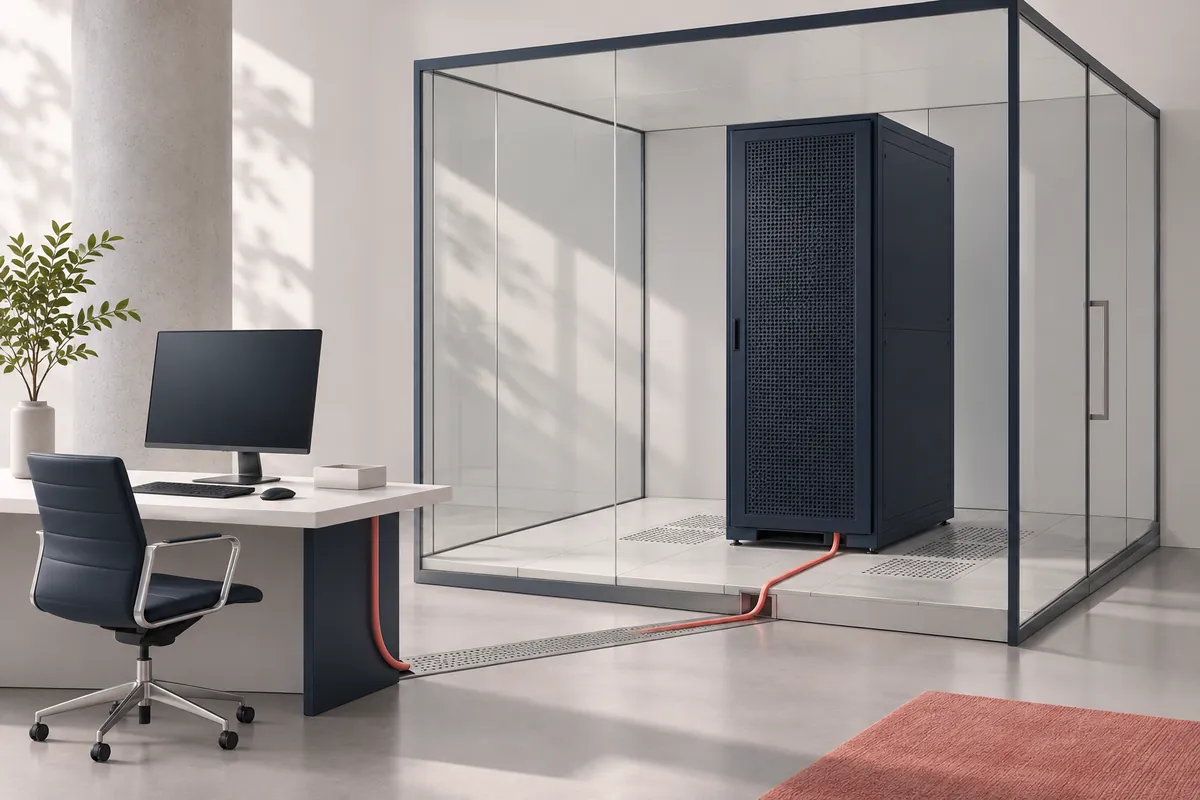
The three walls cloud vision hits
Latency: a camera pipeline at 30fps cannot wait on a network round-trip — tracking falls apart. Connectivity: stockrooms, basements, construction sites and rural infrastructure are exactly where vision is most valuable and networks are worst. Economics: per-image API pricing looks harmless in a demo and becomes a seven-figure line item at continuous-scanning volume.
What modern on-device stacks actually achieve
Optimized YOLO-class detectors with tracking (ByteTrack) and embedding-based classification (CLIP-style) run in real time on current iPhones via CoreML — full detect-track-classify pipelines with zero cloud dependency. That's not theoretical: it's the architecture behind our multi-tenant retail scanning system, and it transfers directly to inspection and asset-recognition workloads.
A decision rule that holds up
Ask two questions. Does the result need to arrive in under ~100ms, continuously? Will the camera ever be somewhere connectivity isn't guaranteed? One yes → on-device. Two nos → cloud is fine, and iterates faster. Hybrid is legitimate too: on-device for the real-time loop, cloud for periodic heavy analysis and model updates.
Related questions
Is on-device accuracy worse than cloud?
How do on-device models get updated?
What about data privacy?
Related from the engineering desk
Have the problem this article describes?
One scoping call with an engineer. A straight answer on whether it's buildable and what it costs.